Airway Health Resources
Published on March 15, 2026.
Last updated on October 18, 2026.
A collection of resources related to airway health, covering nose breathing, tongue posture, mouth taping, breathing exercises, the Buteyko method, and myofunctional therapy. Like any physical training, these exercises benefit from consistent daily practice. Approach them with the same intentionality you'd bring to practicing a musical instrument.
Nose Breathing
Breathing through the nose filters, warms, and humidifies air before it reaches the lungs, and triggers the release of nitric oxide, a molecule that improves oxygen absorption and supports immune function. Mouth breathing, by contrast, bypasses all of this, and chronic mouth breathing is linked to poor sleep, snoring, dental problems, forward head posture, and facial development changes in children.
Signs that your breathing may need attention include habitually breathing through your mouth (especially during sleep), snoring, waking up with a dry mouth or sore throat, chronic nasal congestion, or feeling short of breath during light activity. If any of these sound familiar, the resources on this page are a good place to start.
The simplest way to begin is during the day: consciously close your mouth and breathe through your nose while working, walking, or exercising. Once daytime nasal breathing feels natural, you can transition to nighttime breathing with mouth taping.
If chronic nasal congestion makes nose breathing difficult, addressing the underlying cause can make a significant difference. Allergies are a common culprit. Treatments like sublingual immunotherapy (allergy drops) or allergy shots can reduce congestion over time, making nasal breathing feel more natural. In the meantime, simple nose unblocking exercises can provide quick relief when your nose is stuffed up.
Articles
- Nasal Breathing, Brain Function and Healthy Sleep Science & Research: a curated collection of scientific studies on the benefits of nasal breathing.
Products
- Xlear Nasal Spray with Xylitol: a nasal spray that can help clear nasal passages, making nose breathing easier.
Tongue Posture
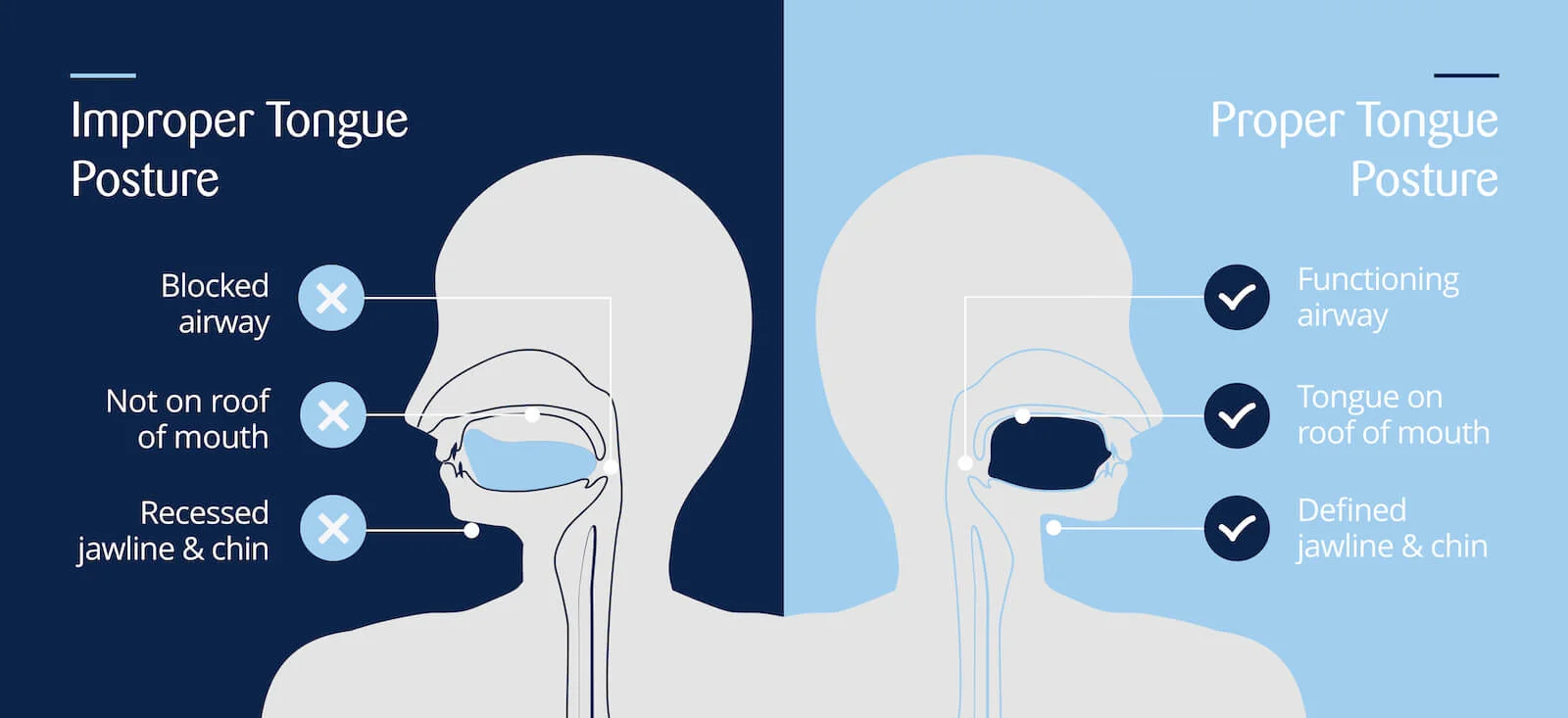
Correct tongue posture (resting the entire tongue against the roof of your mouth, with lips closed and teeth lightly together) is the foundation that ties nose breathing, mouth taping, and myofunctional therapy together. When the tongue sits in this position, it naturally seals the oral airway and encourages breathing through the nose. Over time, maintaining proper tongue posture can also support healthy jaw development and dental alignment.
Articles
- How to Stop TMD and Jaw Pain Forever – Part 1: explores the three types of TMD-related stress (mental/emotional, mechanical, & postural) and how proper tongue posture can relieve jaw pain.
- How to Stop TMD and Jaw Pain Forever – Part 2 – The Posture Solution. Covers two postural strategies to stop jaw pain: upthrusting the head (imagining a string pulling from the crown) and keeping the tongue in the “home” position on the roof of the mouth.
Videos
- Proper Oral Resting Posture with Instructions & Visuals
- Self-Empowerment for TMD: Using Awareness & Tongue Posture to Relax the Jaw & Mind
- Intro to Mewing: How Facial Muscle Tone & Body Posture Impact Oral & Whole-Body Health
Products
- Froggymouth: a passive oral device that retrains tongue posture by reprogramming swallowing patterns. It holds the lips apart, activating the muscles that elevate the tongue to the roof of the mouth. Worn just 15 minutes a day, typically for 2–6 months.
Mouth Taping
Mouth taping involves placing a small strip of hypoallergenic tape over your lips during sleep to encourage nose breathing. The goal isn't permanent dependence on tape. It's to retrain your body so nasal breathing becomes the default again. In Breath, James Nestor describes how switching from mouth breathing to nasal breathing with mouth taping eliminated his snoring, lowered his blood pressure, and improved his sleep. Research suggests that for most habitual mouth breathers, the issue is a learned habit rather than a structural problem: once the mouth is gently kept closed at night, the body naturally returns to nasal breathing. Consult a doctor before trying mouth taping, especially if you have nasal congestion, sleep apnea, or other breathing conditions. If mouth taping feels uncomfortable at first, start gradually: wear tape for 10 minutes during the day, then increase over a couple of weeks before trying it at night.
Books
- Breath: The New Science of a Lost Art by James Nestor
- LipZip: Breathe Better to Live Better by Timothy Ives & Trisha O'Hehir
Podcasts
Products
- Mouth tape: options range from simple micropore tape (available at any drugstore) to specialized products like MyoTape and Hostage Tape. MyoTape, instead of sealing the lips directly, wraps around the mouth like a loop, which feels less restrictive while still keeping the mouth closed. The wrap-around design also has a safety benefit: it allows “mouth puffing,” the body's natural reflex to briefly open the mouth if breathing is compromised. Traditional tape that seals the lips can block this reflex, and in some cases may worsen obstructive sleep apnea. MyoTape comes in variants for sensitive skin, facial hair, and kids. If you're using traditional tape instead, one effective technique is placing two thin vertical strips (about 1/4 inch wide) on each side of your cupid's bow.
Breathing Exercises
Cadenced breathing: inhale for 5–6 seconds, exhale for 5–6 seconds, repeating for several minutes. This slow, rhythmic pattern (about 5–6 breaths per minute) has been shown to improve heart rate variability (HRV), a key marker of cardiovascular health and stress resilience. It works by synchronizing your breathing with your heart's natural rhythm, activating the parasympathetic nervous system.
Diaphragmatic breathing: place one hand on your chest and the other on your belly. Breathe in slowly through your nose, letting your belly rise while your chest stays relatively still, then exhale gently. This engages the diaphragm (the primary breathing muscle) rather than relying on shallow chest breathing. Diaphragmatic breathing reduces stress, lowers blood pressure, and strengthens the diaphragm over time.
Buteyko Method
Developed by Dr. Konstantin Buteyko in the 1950s, the Buteyko Method is a breathing retraining technique built on three principles: nasal breathing, reduced breathing volume, and relaxation. The core idea is that many people chronically overbreathe, depleting carbon dioxide levels in the blood and triggering a cascade of issues from asthma to anxiety. Buteyko exercises train you to breathe more slowly and gently through the nose, restoring a healthier balance of oxygen and CO2.
Patrick McKeown, who trained directly under Buteyko and was accredited to teach the method in 2002, has done the most to bring these ideas to a wider audience. His BOLT (Body Oxygen Level Test), an adaptation of Buteyko's original Control Pause, provides a simple way to track your breathing efficiency: exhale normally, hold your breath, and time how long until you feel the first urge to breathe. A longer BOLT score indicates better breathing patterns.
Books
- The Oxygen Advantage by Patrick McKeown
Apps
- Oxygen Advantage App: a free companion app from Patrick McKeown with guided breathing exercises and a Sleep challenge designed to support nasal breathing and deeper sleep.
Myofunctional Therapy
Myofunctional therapy uses targeted exercises to retrain the muscles of the face, tongue, and throat. It addresses issues like incorrect tongue posture, mouth breathing, and improper swallowing patterns, all of which can contribute to sleep-disordered breathing, TMJ dysfunction, and orthodontic relapse. The exercises are simple but require consistency, much like physical therapy for any other part of the body.
Videos
- How Does Myofunctional Therapy Actually Work?
- Mastering Myofunctional Therapy — The Four Goals
- How to Stop Mouth Breathing in Five Easy Steps
- Myofunctional Therapy Exercise with Dr. Audrey Yoon #1: Obstructive Sleep Apnea
- Myofunctional Therapy Phase 1 Exercises #1
- Myofunctional Therapy Phase 1 Exercises #2
- Myofunctional Therapy Phase 1 Exercises #3